Single Girder Overhead Travelling Cranes
Economical overhead crane for low-headroom and narrow-bay buildings
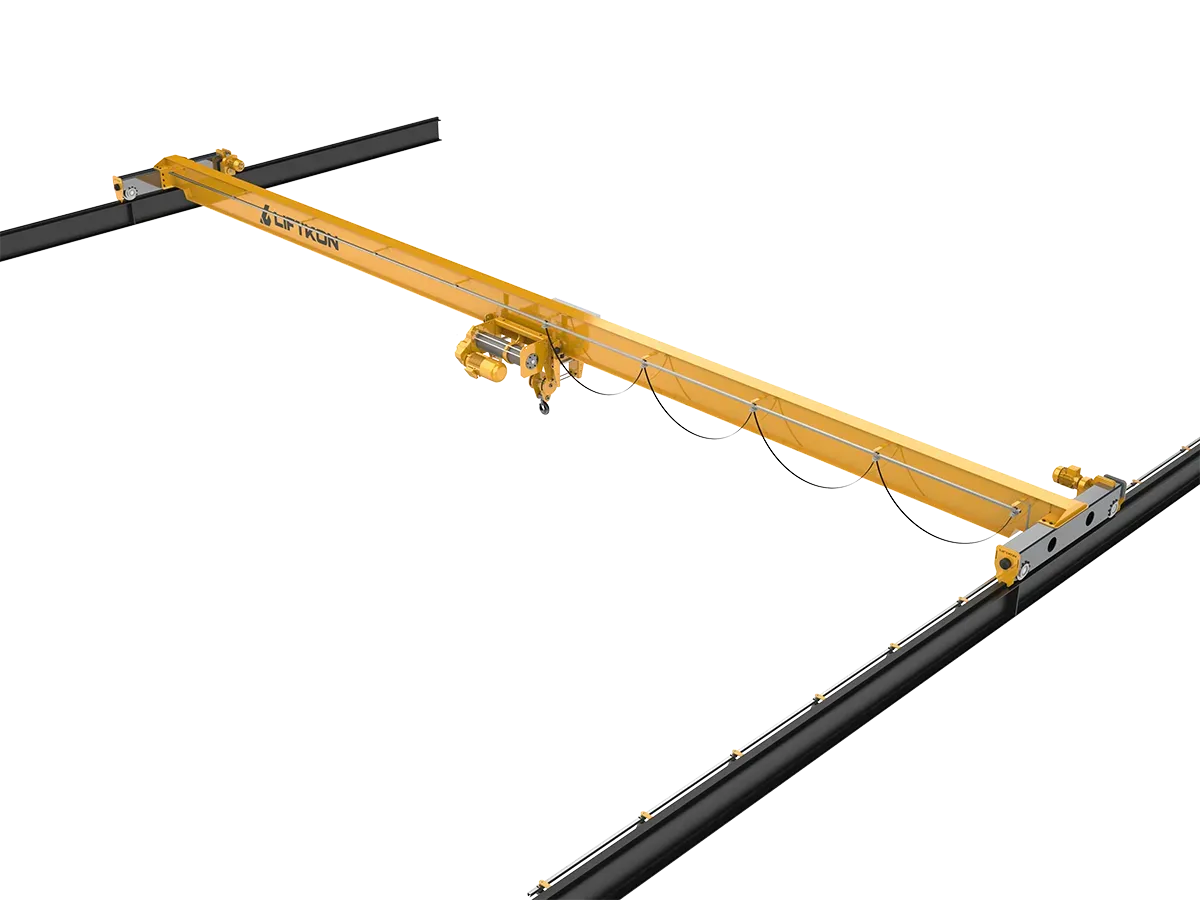
Single girder overhead travelling cranes use a monorail hoist trolley running under one main girder, offering a light and economical solution for light and medium loads. They also suit low-ceiling and older buildings.
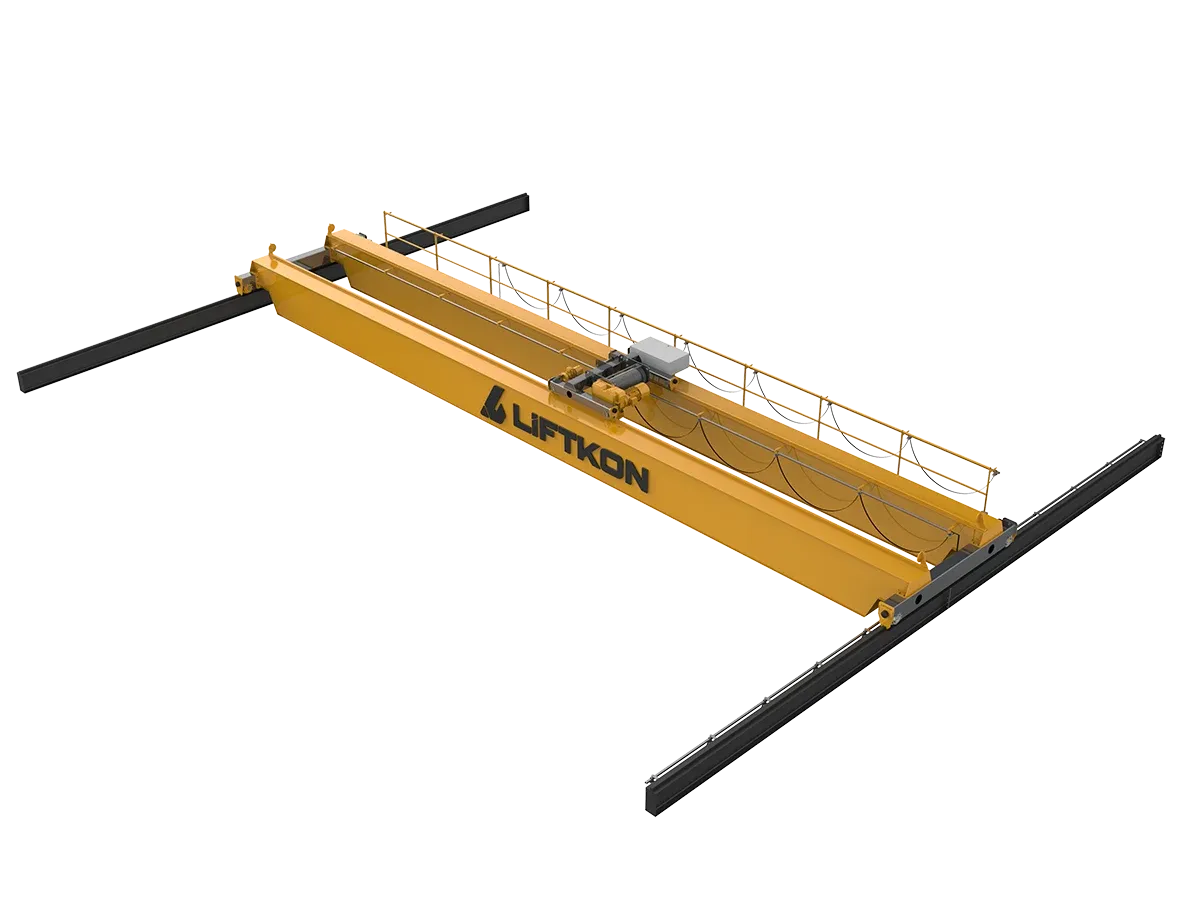
A single girder overhead crane consists of one main girder travelling on runway rails and a hoist trolley running on the girder's bottom flange. The bridge girder can be built as a box section, rolled section or fabricated steel. The lighter bridge puts less load on the building and runway, reducing both investment and operating costs.
Which buildings is it suitable for?
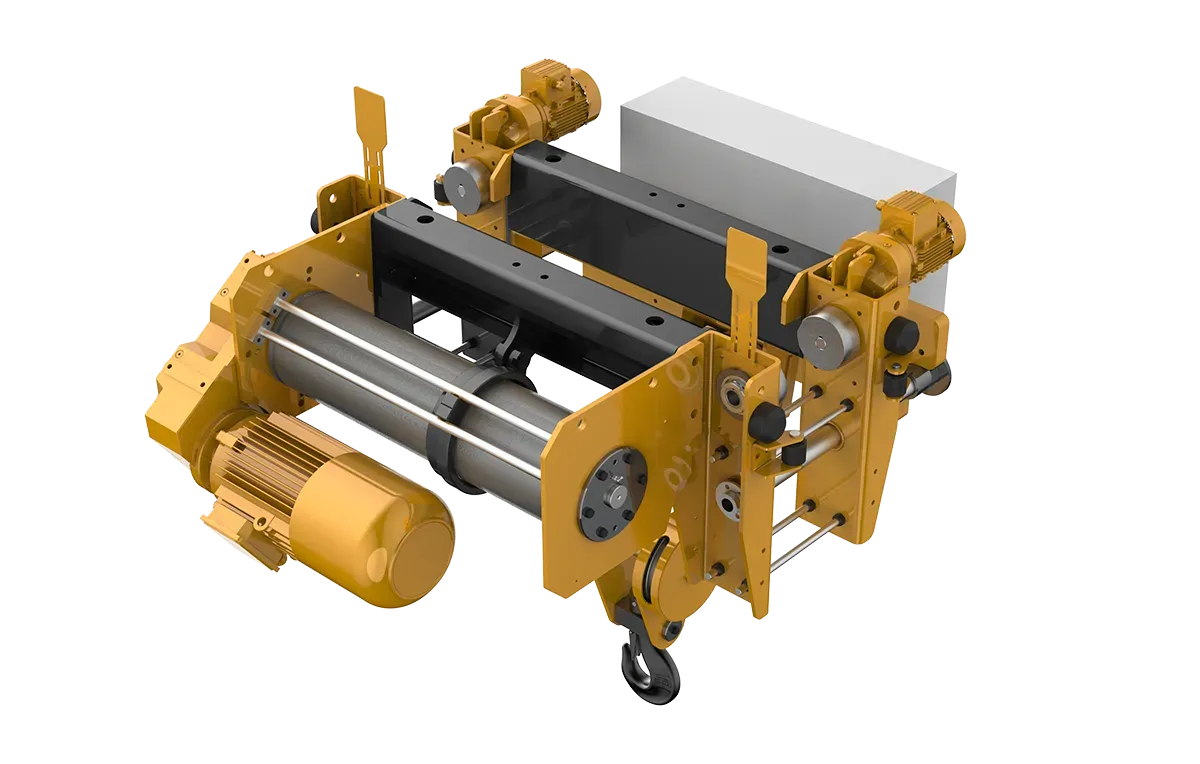
Narrow bays, low-ceiling buildings and older structures with limited headroom are the most common applications. Lifting is handled by a single girder crane trolley or a monorail hoist trolley; underslung or side-mounted trolley types make the most of available hook height and approach dimensions.
Design and power supply
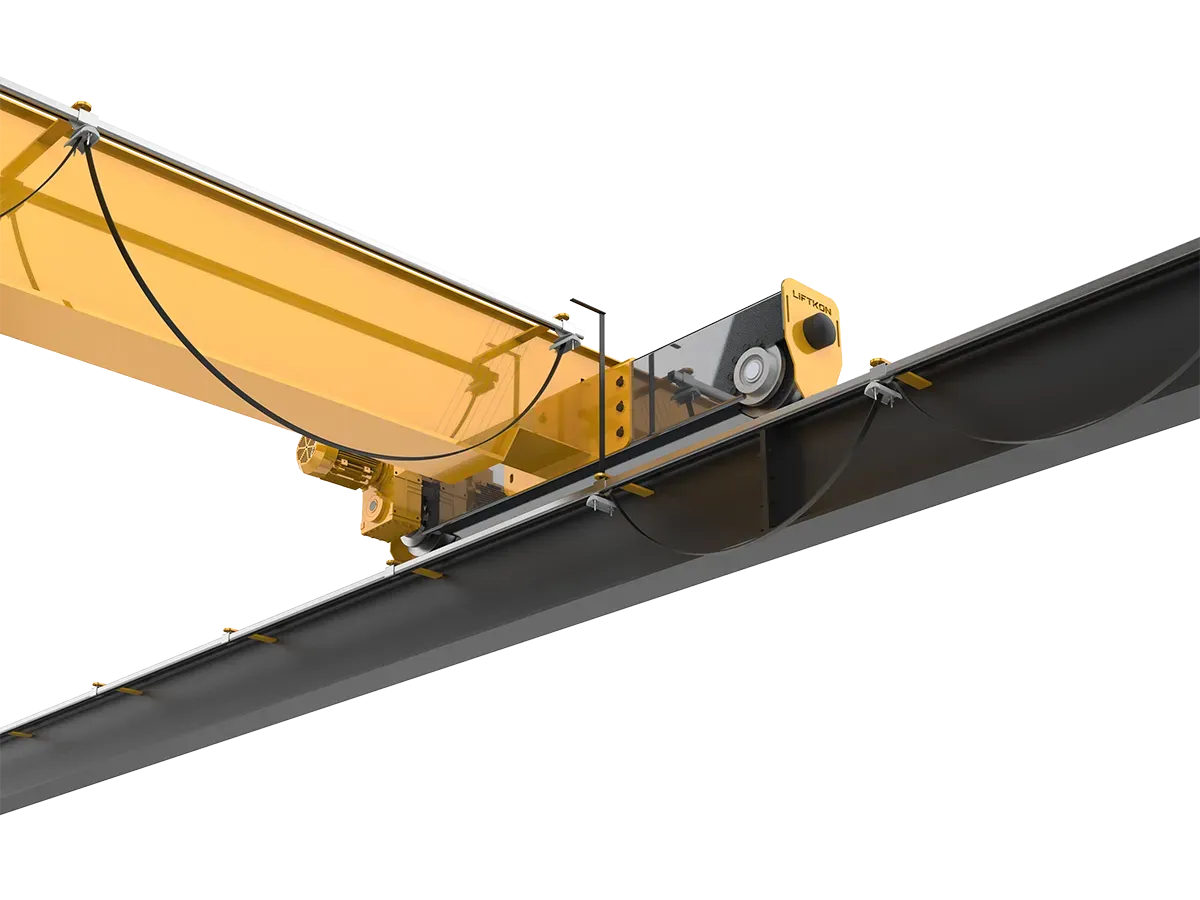
The bridge girder is optimised to DIN and FEM principles for the crane's duty class. Power and control cables are carried along a C-rail festoon, which makes maintenance easy. The crane can be operated by pendant or radio remote control and works with below-the-hook devices such as lifting beams and clamps.
Safety and maintenance
Emergency stop, load sensing, limit switches and overload protection are standard. Regular inspections, lubrication, load tests and checks of safety devices keep the crane running for years. Send us your capacity, span and hook height and we will prepare a quote for your facility.
Single Girder Overhead Travelling Cranes are built by LIFTKON. Because every unit is engineered for a specific plant, dimensions, duty class and equipment follow the facility’s own data. Share capacity, span, lifting height and daily cycles and the configuration is worked out together with you.
Advantages
- Economical investmentA lighter bridge reduces steel, runway and building costs.
- Suited to low headroomUnderslung or side-mounted trolleys make the most of the height available.
- Fast installationLight, simple structure shortens erection time.
- Easy maintenanceC-rail festoon and modular components.
Applications
- Production plantsMachine feeding and part handling.
- WarehousesLoading and stacking in storage areas.
- WorkshopsMaintenance, assembly and repair shops.
- Automotive industrySupplier production and assembly areas.
- Older and low-ceiling buildingsLifting where headroom is limited.
Industries
Options
- Radio remote control
- Variable speed drives (inverter)Soft start/stop and precise positioning.
- Chain or wire rope hoistSelected by load and duty.
- Underhung (suspended) craneRunning on a roof-mounted runway.
Safety
- Emergency stop
- Hoist and travel limit switches
- Overload protection
- Hoist and travel brakes
Gallery