Crane Sheave Block
Guide and equaliser sheaves for the rope reeving
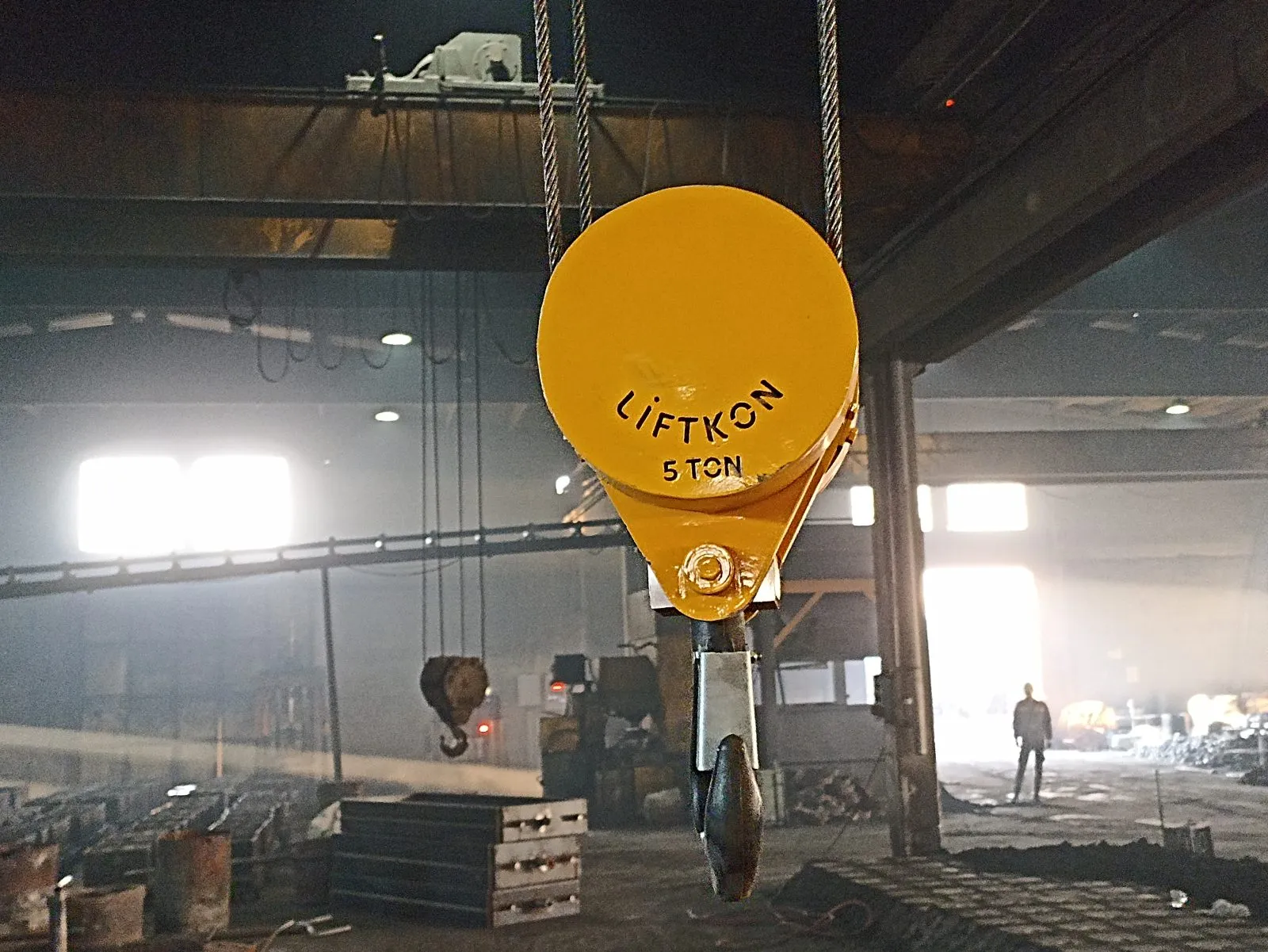
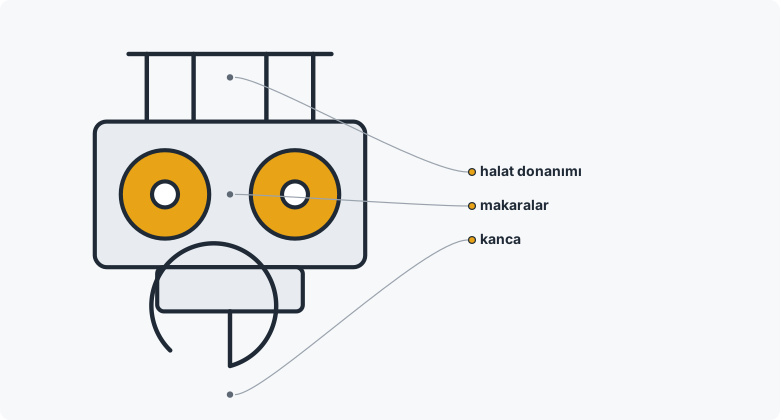
The crane sheave block guides the rope in the reeving and shares the load between sheaves. Together with the hook block and drum, it forms the hoisting system.
A sheave block consists of rope sheaves, axle, bearings and a supporting housing. It is used on the crane trolley as fixed (equaliser) sheaves and as guide sheaves in the reeving. As the reeving ratio increases (2/1, 4/1 etc.), the number of sheaves rises and the lifting force is shared between them.
Design
Sheave diameter is set by rope diameter and duty class, and the groove profile must match the rope. Unsuitable sheave diameters and grooves cause premature fatigue of the steel wire rope.
Maintenance
Groove wear, bearing noise and free rotation should be checked periodically. Request a quote for hook block and sheave block replacement.
Selection and application
The data that drive the selection of a Crane Sheave Block are the crane’s capacity, duty class (FEM/ISO), travel speed and mounting dimensions. The duty class states how many hours the part must withstand a given load cycle and feeds directly into material, heat treatment and section size. Two cranes of the same capacity in different duty classes do not use the same part.
LIFTKON produces this part both for its own cranes and for other makes already in service. A correct match needs the crane make, capacity, serial number if available and the dimensions of the existing part; a photograph of the worn part also helps. A sketch or drawing can be attached to the quotation form.
Advantages
- Diameter and groove to suit the rope
- Longer rope life
- Made to size
Applications
- Crane trolleys
- Reeving renewal