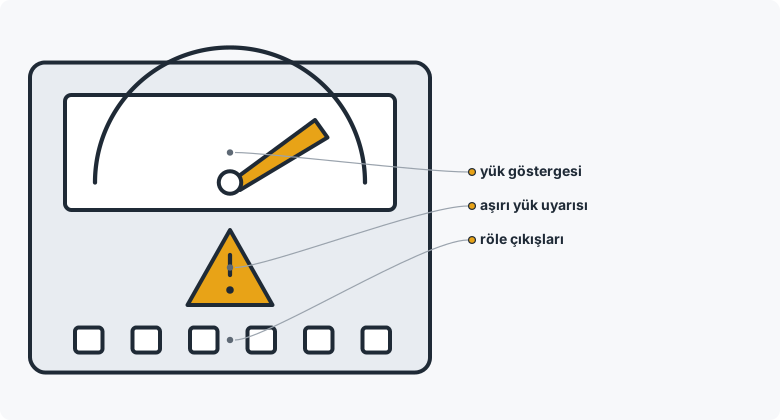
Overload Protection Units
Safety unit protecting the crane and operator against overload
The overload protection unit continuously measures the load and stops hoisting when the rated capacity is exceeded. It is one of the basic safety devices of a crane.
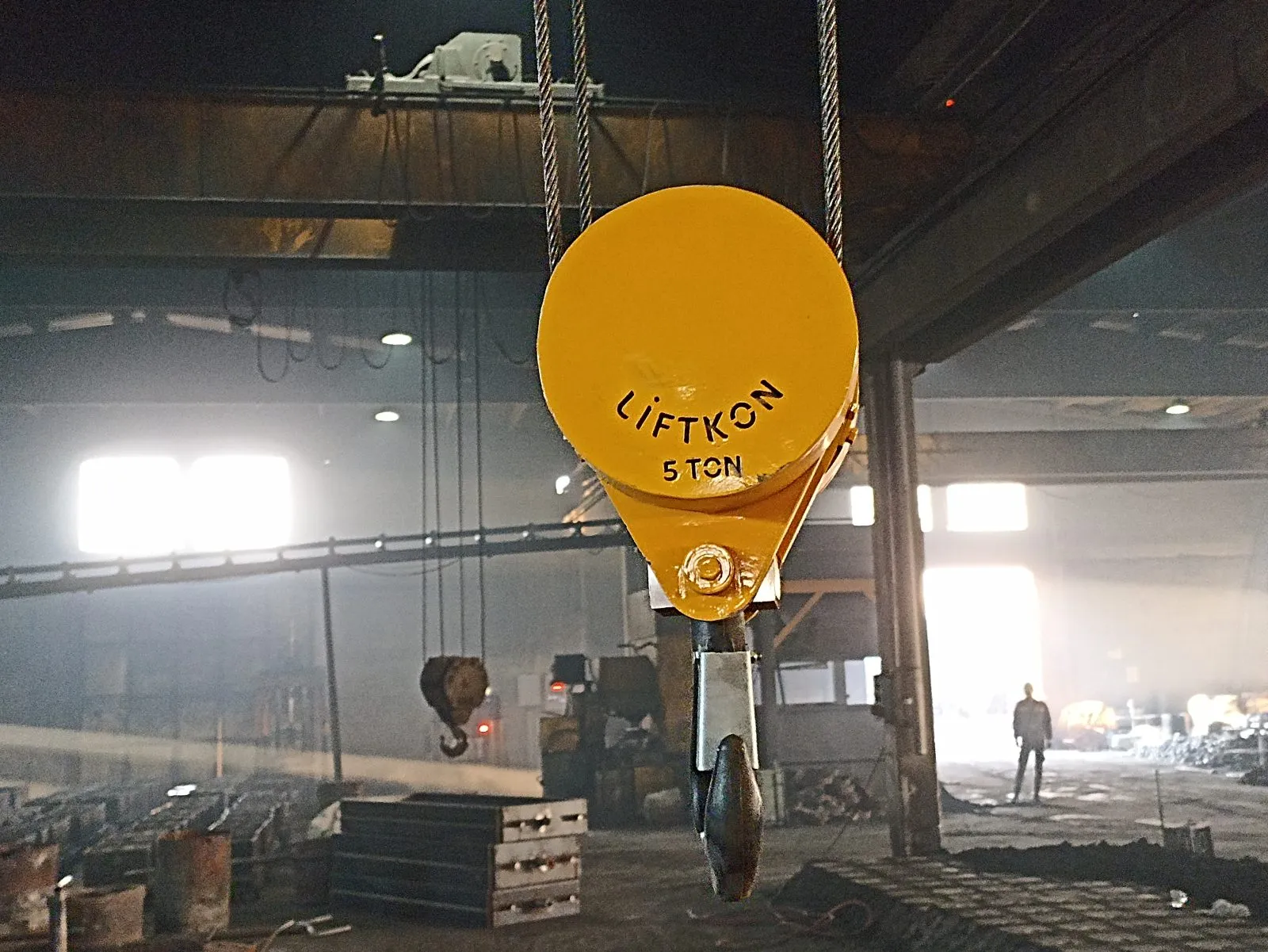
An overload protection system consists of a sensor (load cell or force sensor) at the rope anchor, hook or sheave connection and an evaluation unit. When the load exceeds the set limit, the hoisting-up motion is cut; only lowering is allowed.
Why is it needed?
Lifting beyond capacity can permanently damage the rope, hook, gearbox and bridge structure and cause serious accidents. Overload protection guards the crane even when the operator does not know the weight of the load and is one of the basic devices expected under occupational safety rules.
Application
It is standard on LIFTKON cranes and can be retrofitted to existing cranes. If required, load data is shown on a display for the operator; see our crane load indicator. For your existing crane, submit a service request.
Selection and application
The data that drive the selection of a Overload Protection Units are the crane’s capacity, the number of motions (hoist, trolley, bridge), supply voltage, control type and working environment. In dusty, humid or outdoor applications the protection class is assessed separately. Where variable speed is required, the drive is selected together with motor power and the number of cycles.
LIFTKON uses this equipment on new cranes and in the electrical refurbishment of existing ones. For a retrofit the crane make, capacity, motor ratings and the existing panel or control details are needed; a photograph of the nameplates is usually enough. It can be attached to the quotation form, and installation and commissioning can be included in the scope.
Advantages
- Prevents overloading
- Protects mechanismsRope, hook, gearbox and structure.
- Retrofittable
Applications
- Overhead and gantry cranes
- Pillar and wall jib cranes
- Crane modernisation
Options
- Load display
- Pre-alarm stage
Safety
Settings and calibration must be done by authorised personnel and tested at periodic inspections.