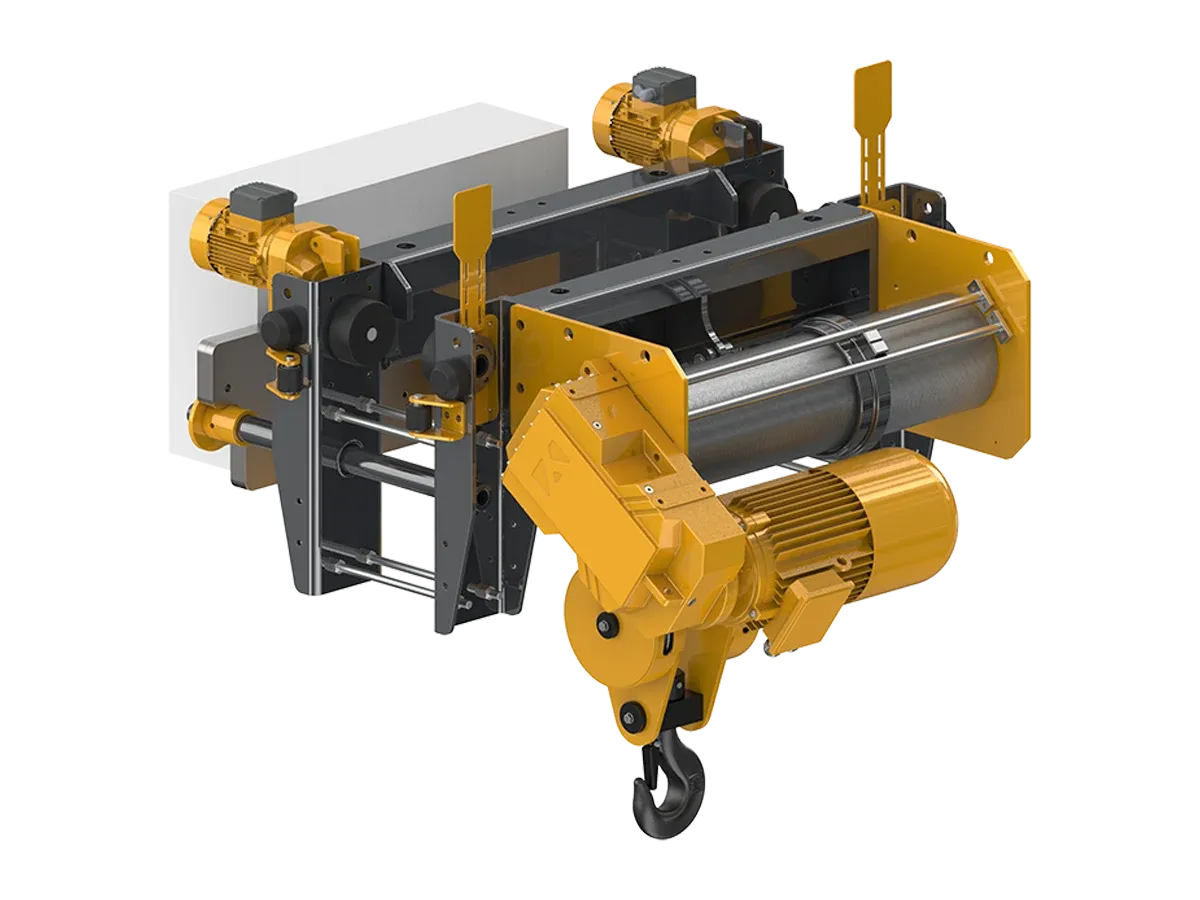
Monorail Hoist Trolley
Monorail trolley for one-directional handling along a fixed line
The monorail hoist trolley runs on a fixed I-beam or rail and carries loads along a single line. It is an economical solution for line feeding, loading docks and single-axis handling.
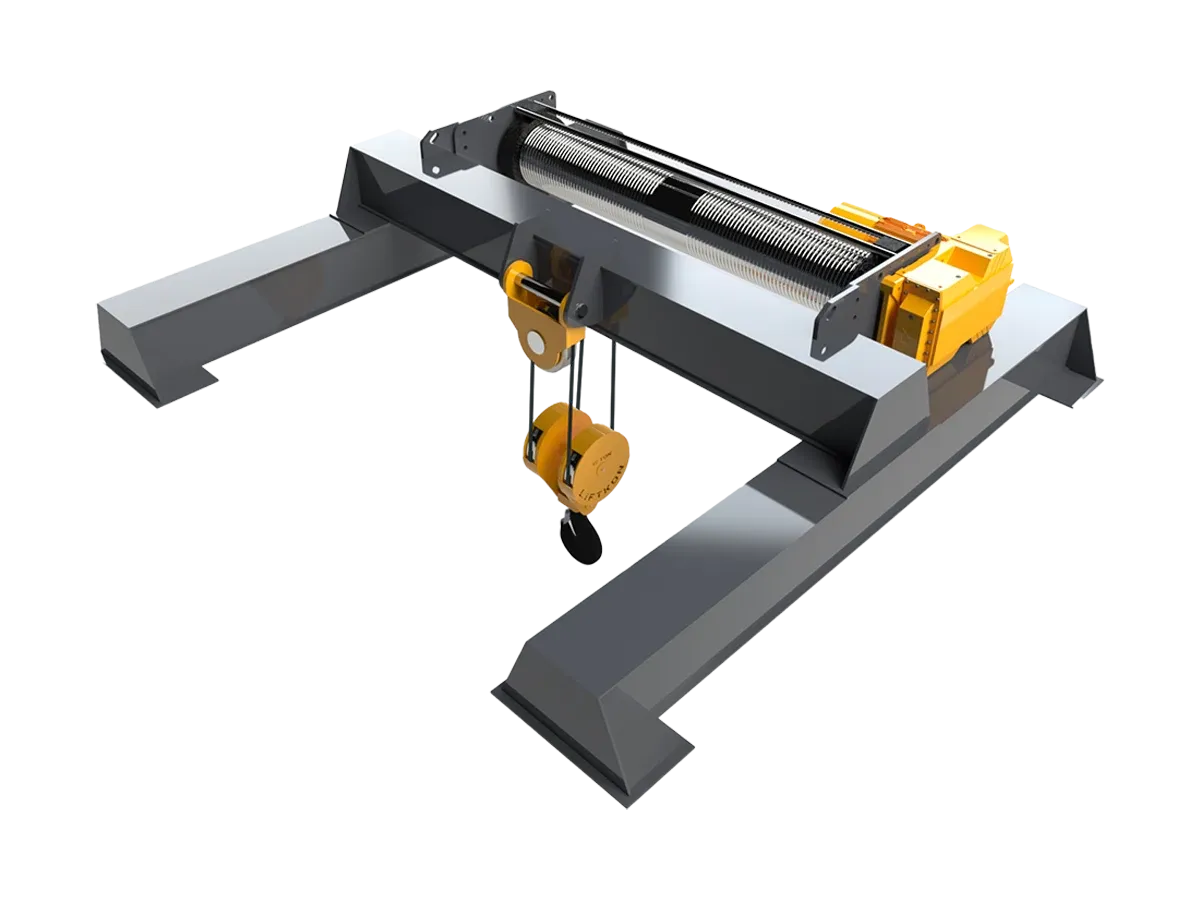
A monorail system consists of a beam fixed to the roof or a support structure and a hoist trolley running along it. Unlike overhead cranes, movement is along one line only, making it an economical, practical solution for feeding production lines, moving loads between machines, loading docks and loading points that extend outside the building.
Structure
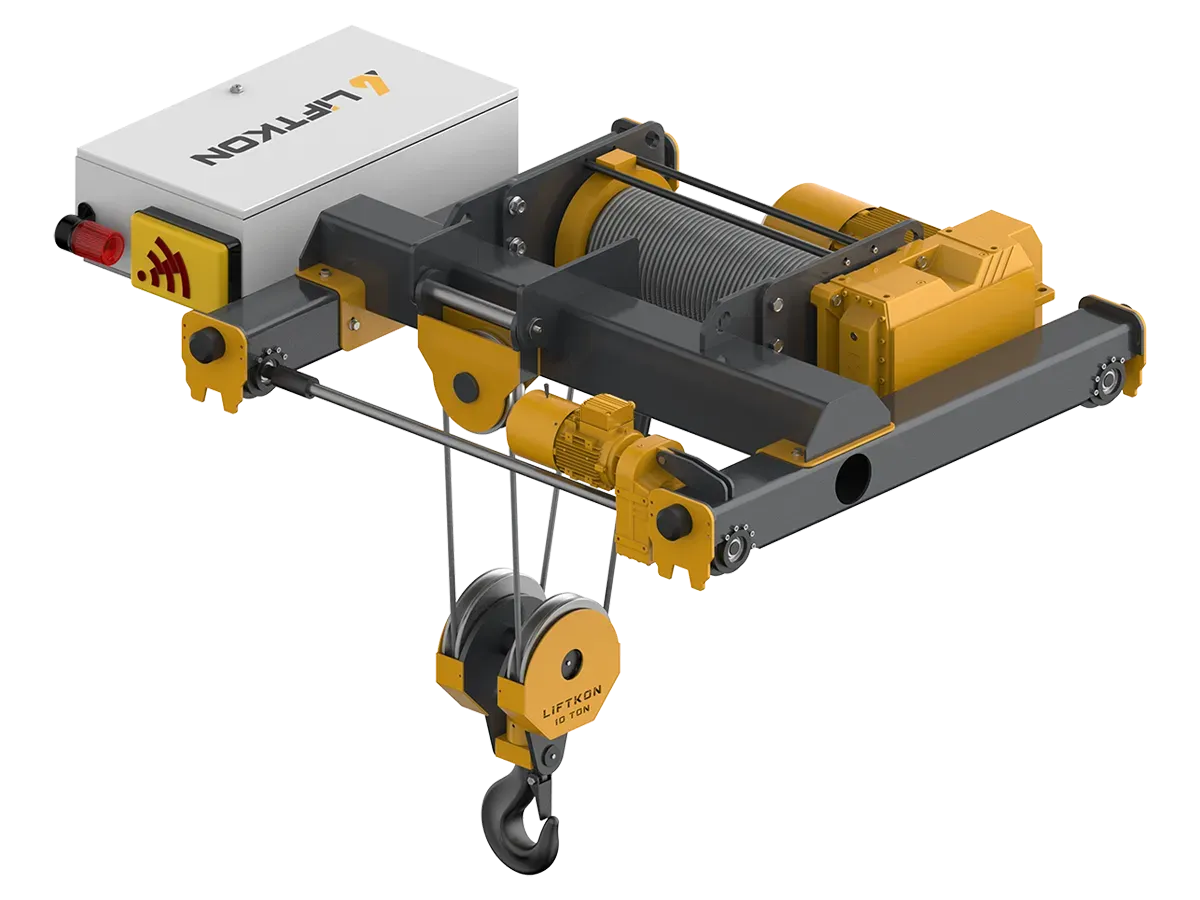
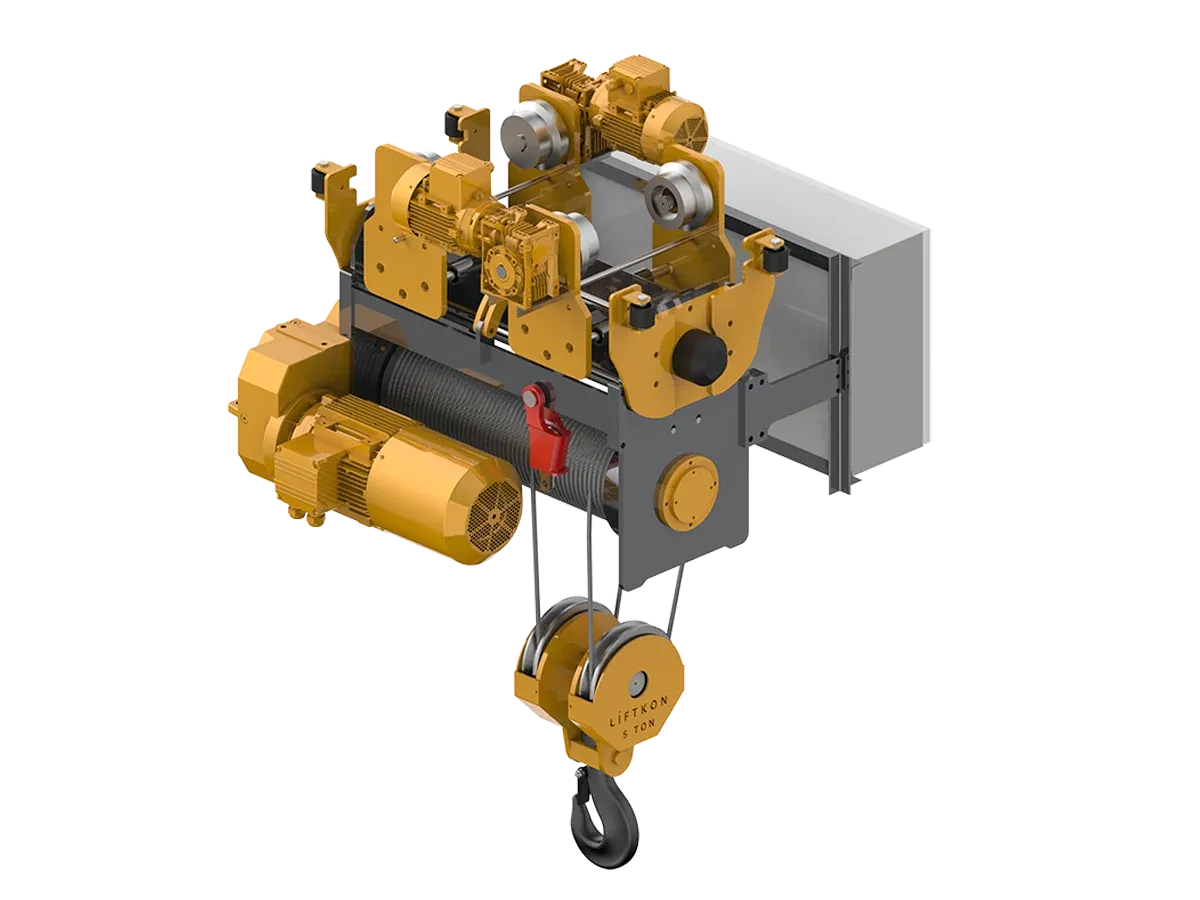
LIFTKON monorail trolleys are designed together with LIFTKON's own monorail trolley unit. Their dismountable structure makes installation and maintenance easy. A trolley travel drive unit is used for the wheels running on the beam flange. The same trolleys also serve as hoist units on single girder overhead cranes.
Controls and safety
The trolley is operated by pendant or radio remote control. End-of-line limits, hoist limit switches and overload protection are standard. For curved tracks, the trolley is selected to suit the track geometry.
Request a quote with line length, beam type and capacity.
Selection and application
The data that drive the selection of a Monorail Hoist Trolley are the crane’s capacity, span, lifting height, travel speed, daily cycles and working environment. These define the FEM/ISO duty class, and the duty class in turn defines motor power, gear ratio, wheel diameter and load-bearing sections. A unit selected on capacity alone wears early and causes unplanned downtime, so the calculation follows real usage.
LIFTKON builds this unit both for new cranes and for the modernisation (retrofit) of cranes already in service. For a retrofit the crane make, capacity, rail size and the mounting dimensions of the existing unit are needed. Drawings or photographs can be attached to the quotation form; installation and commissioning can be included in the scope.
Advantages
- Economical solutionSingle-axis handling with no bridge.
- Ideal for line feedingMachine-to-machine and dock loading.
- Dismountable structureEasy installation and maintenance.
- Shared spare partsSame components as single girder trolleys.
Applications
- Production line feeding
- Loading docks
- Workshops and maintenance areas
- Single girder overhead cranes
Industries
Options
- Radio remote control
- Variable speed drive (inverter)
- Curved track compatibility
Safety
- End-of-line limit switches and buffers
- Hoist limit switches
- Overload protection