Crane Travel Limit Switches
Keeps bridge and trolley motion within safe limits
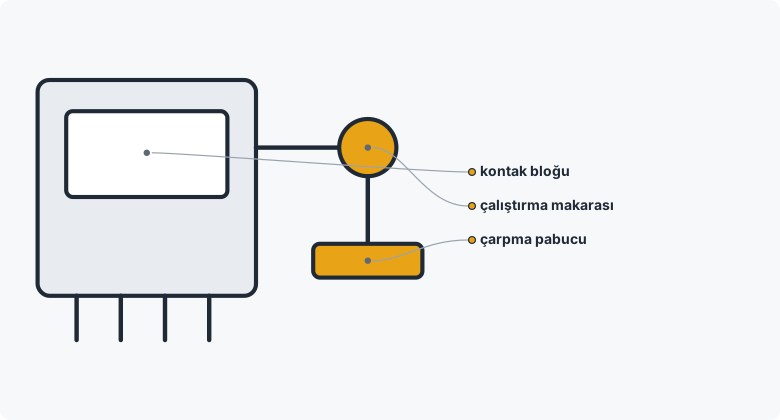
Crane travel limit switches automatically slow down or stop bridge and trolley motion at the end of travel or in defined zones, preventing collisions and buffer impacts.
Travel limit switches first slow the crane, then stop it, as it approaches the end of the runway, another crane or a restricted zone. This prevents hard buffer impacts, structural damage and load swing.
Types
Lever-type (mechanical) limit switches, cross limits, inductive and laser distance sensors can be used. Where several cranes run on the same runway, anti-collision systems are applied. Separate hoist limit switches control the hoisting motion.
Limit switches work with the crane control panel. To add limits or anti-collision to your existing cranes, submit a service request.
Selection and application
The data that drive the selection of a Crane Travel Limit Switches are the crane’s capacity, the number of motions (hoist, trolley, bridge), supply voltage, control type and working environment. In dusty, humid or outdoor applications the protection class is assessed separately. Where variable speed is required, the drive is selected together with motor power and the number of cycles.
LIFTKON uses this equipment on new cranes and in the electrical refurbishment of existing ones. For a retrofit the crane make, capacity, motor ratings and the existing panel or control details are needed; a photograph of the nameplates is usually enough. It can be attached to the quotation form, and installation and commissioning can be included in the scope.
Advantages
- Prevents collisions and impacts
- Two-stage slow-down and stop
- Retrofittable
Applications
- Bridge and trolley travel
- Multiple cranes on one runway
Options
- Laser distance sensor
- Anti-collision system