
Single Girder or Double Girder? Comparing Overhead Crane Types
, 1 min read
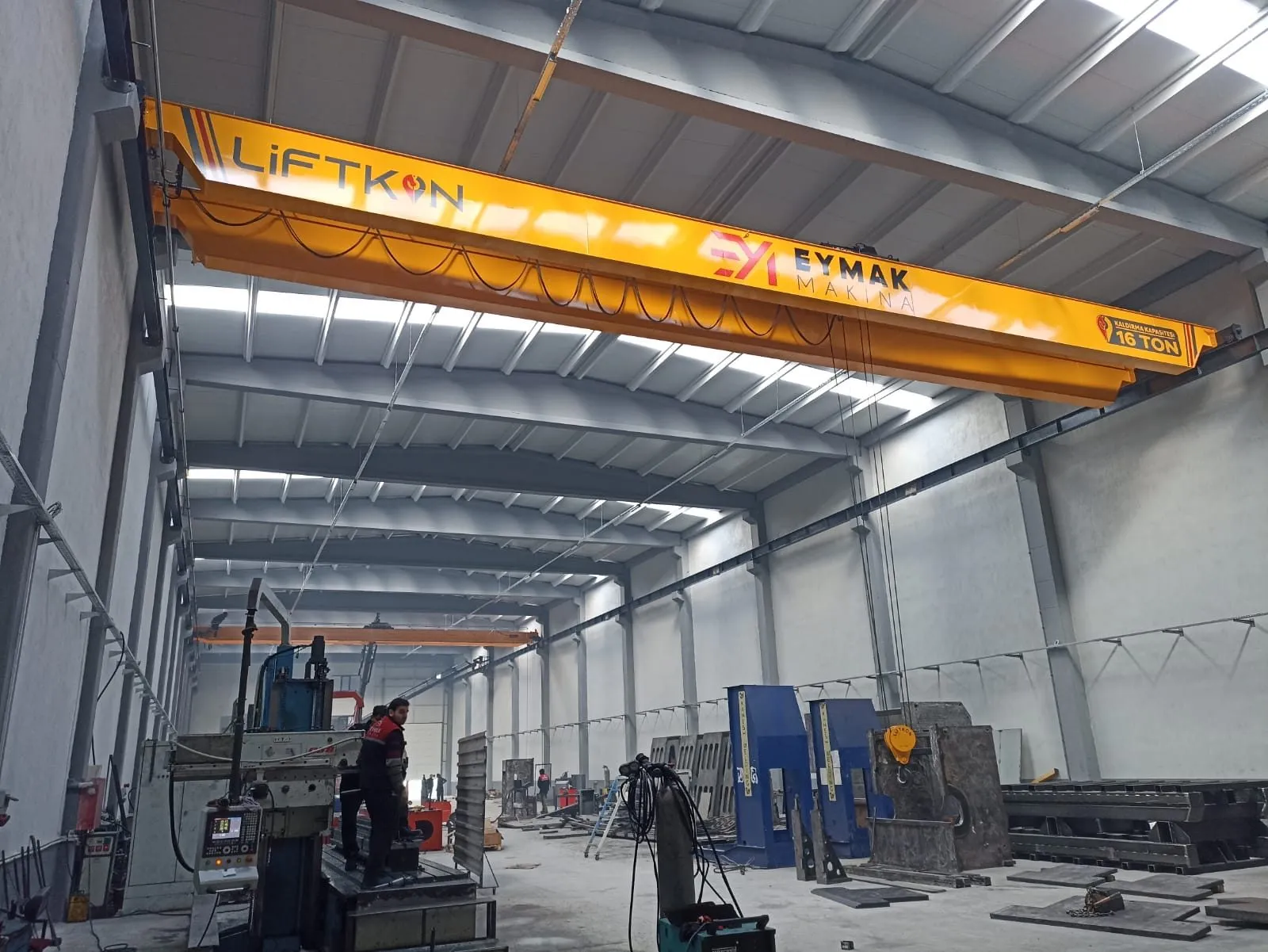
Differences between single girder and double girder overhead travelling cranes: capacity, span, hook height, cost and areas of use.
One of the first decisions in an overhead crane investment is the girder type. Single girder overhead travelling cranes and double girder overhead travelling cranes do the same job with different structures; the right choice depends on capacity, span and the building.
Single girder overhead crane
The bridge consists of a single girder; the trolley runs on the bottom flange of the girder (underslung) or alongside it (side-mounted). Thanks to its lighter structure, it places less load on the building, and installation and maintenance are practical. It is an economical solution for medium capacities and short to medium spans.
Double girder overhead crane
The bridge consists of two parallel girders, and the double girder crane trolley runs on rails on top of the girders. It is suitable for high capacities, wide spans and intensive use. Because the trolley is on top of the girders, the hook rises higher, and installing a maintenance platform on the girders is also easier.
Comparison
- Capacity: Double girder cranes stand out for heavy loads.
- Span: For wide spans, double girder cranes are stiffer and more efficient.
- Hook height: In the same building, a double girder crane generally achieves a higher lift.
- Building load and cost: Single girder cranes are lighter; the initial investment is usually lower.
- Intensity of use: Double girder cranes are preferred for continuous, intensive operation.
Which one should you choose?
There is no single right answer; the decision is made according to on-site measurements and the usage profile. Fill in the quotation form with your capacity, span and ceiling height, and we will compare both options for you.