
7 Criteria to Consider When Choosing an Overhead Travelling Crane
, 2 min read
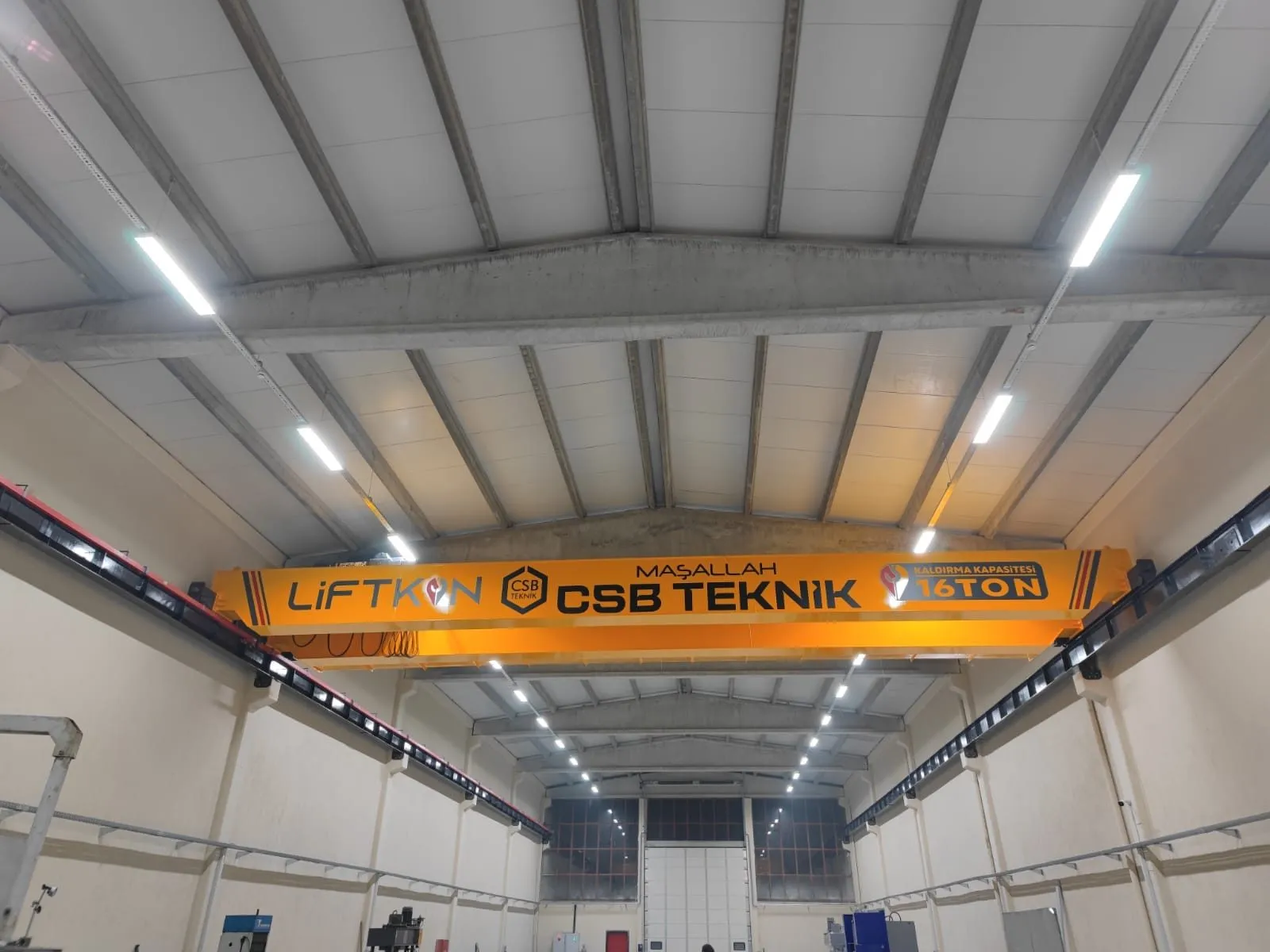
Capacity, span, lifting height, duty class, speed, runway and power supply: the key criteria you need to know to choose the right overhead travelling crane.
An overhead travelling crane (bridge crane) is an investment that shapes a facility's material flow for years. A crane selected with the wrong capacity or an insufficient duty class quickly means breakdowns, downtime and extra cost. The following seven criteria are the basis for choosing the right crane and comparing quotations.
1. Lifting capacity
The heaviest load the crane will lift is calculated including the load-handling attachments (lifting beam, C-hook, vacuum lifter, etc.). Leaving a reasonable margin for products that may become heavier in the future prevents the crane from quickly becoming undersized.
2. Span (bridge length)
The span is the distance between the centrelines of the two runway rails. As the span increases, so does the bending moment the girder must carry; this is why double girder overhead travelling cranes are generally preferred for wide spans.
3. Lifting height and hook approach
The highest point the hook can reach is limited by the building's ceiling height. On double girder cranes, the trolley runs on top of the girders, so the hook can rise higher; in buildings with low ceilings this difference can be decisive.
4. Duty class (intensity of use)
How many hours a day the crane will work, and at what load ratios, directly affects the sizing of the mechanisms. A foundry or steel plant in continuous production and a workshop that uses its crane a few times a week for maintenance should not use cranes of the same class.
5. Speeds and precise positioning
Hoisting, trolley and bridge travel speeds are set according to the pace of production. Frequency inverter drives provide soft starts and stops, reduce load sway and lower mechanical wear.
6. Runway and building structure
The crane's load is transferred to the columns and runway girders. If a crane is to be added to an existing building, the adequacy of the runway and columns must be checked. When no load should be placed on the building structure, gantry cranes are an alternative.
7. Power supply and control
Enclosed conductor bars, festoon cable systems, radio remote control or cabin control are selected according to the facility layout and safety requirements.
Conclusion
The right crane is determined by measuring all of these criteria on site. When you fill in the quotation form for your project, our engineering team will assess your requirements and offer you a suitable solution.